Quick answer
A free palm reading scanner can compare visible hand features such as major lines, palm shape, finger proportion, and obvious markings. It cannot prove destiny, diagnose health, identify a person, or replace a thoughtful human reading.
- Use a clear, well-lit palm photo.
- Read visible notes before symbolic interpretation.
- Check privacy and storage language before uploading.
A free palm reading scanner can compare visible hand features such as major lines, palm shape, finger proportion, and obvious markings. It cannot prove destiny, diagnose health, identify a person, or replace a thoughtful human reading. Use it as a reflective guide: upload a clear palm photo, read the visible notes first, then compare the result with a grounded palmistry guide.
Last updated: July 7, 2026.
Key takeaways
- A scanner is strongest at describing visible features, not making life predictions.
- Photo quality changes the result: light, focus, angle, and full palm visibility matter.
- Privacy matters. Avoid tools that request unnecessary identity details or site images without explaining why.
- The best result combines AI observation with human judgment and clear interpretation limits.
2026 update: check the upload experience before the reading
This July 2026 refresh adds a stronger scanner checklist. Before uploading a palm photo, check whether the tool explains image handling, whether the photo is clear enough, and whether the result separates visible observations from symbolic interpretation. A useful scanner should describe what it sees before suggesting what it may mean.
| Scanner check | Good sign | Pause if |
|---|---|---|
| Photo quality | It asks for full palm, even light, and relaxed hand position | It interprets a cropped or blurry photo confidently |
| Privacy | It explains image use and retention in plain language | It asks for unrelated personal, financial, or ID details |
| Result format | It separates line observations from reflection prompts | It promises destiny, health, love, or money outcomes |
| Next steps | It points to guides for vocabulary | It pressures paid add-ons through fear |
What changed in this refresh
The article now treats AI palm scanning as a photo-based observation tool first. It keeps privacy and claim limits visible so readers can use the tool without over-trusting the result.
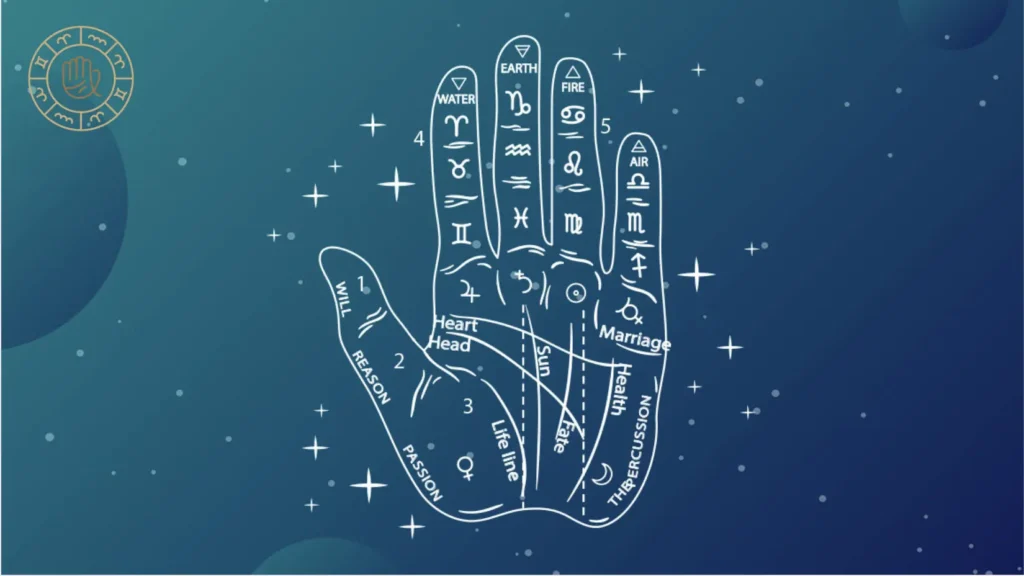
What can an AI palm scanner actually read?
An AI palm scanner works from a flat image. It can notice contrast, line direction, finger length, palm proportion, and some visible creases. That makes it useful for a first pass through traditional palmistry vocabulary. It is not evidence about your future or your health.
| Visible feature | What the tool can compare | What it should not claim |
|---|---|---|
| Life line | Curve, depth, breaks, and relation to the thumb area | Lifespan or medical condition |
| Heart line | Start point, curve, forks, and interruptions | promised relationship outcomes |
| Head line | Length, slope, clarity, and connection to the life line | Intelligence score or fixed personality |
| Fate line | Visibility and path toward the middle finger | Career certainty or financial promise |
| Hand type | Palm shape, finger length, and general proportion | Identity, medical, or psychological assessment |
How to take a better palm photo
The scanner is only as good as the photo. Use natural light, keep the palm relaxed, place the whole hand inside the frame, and avoid strong shadows. A front-facing palm photo usually works better than an angled photo because the major lines are easier to compare.
- Open your palm naturally without stretching the skin.
- Use bright, even light. Avoid flash glare.
- Keep the wrist, palm, and fingers visible.
- Use the dominant hand if you want a present-life reflection, or compare both hands if the tool allows it.
- Read the output as symbolic language, then check the relevant guide on major palm reading lines.
Privacy checklist before uploading
A palm photo is personal data. Before using any free scanner, check whether the page explains image use, storage, deletion, and whether the reading is for reflection only. A responsible tool should not ask for government IDs, financial information, medical history, or unrelated personal details.
- Look for a plain privacy note near the upload area.
- Prefer tools that say images are used for the reading and not stored long term.
- Do not upload documents, faces, or other people in the same image.
- Do not use a palm scanner for medical, legal, or financial decisions.
How to use the result without overreading it
Start with the visible-photo notes. If the scanner says the heart line curves upward, look at the line yourself and compare that observation with a guide such as our heart line meaning guide. Treat the interpretation as a prompt, not a verdict.
Traditional palmistry has a long cultural history, but it is not a scientific method for predicting events. General references such as Allure’s palm-reading guide frame it as a divination practice. That distinction matters: cultural meaning can be interesting and personally useful, while certainty claims need stronger evidence.
When an online scanner is enough
An online scanner is enough when you want vocabulary, reflection, or a structured first look at your hand. It is not enough when you want an in-depth conversation, a tradition-specific reading, or help interpreting confusing markings. In those cases, compare the scanner result with a full guide or consider a reader who clearly explains claim limits.
If you want to continue, start with the Feng Shui Karma palm reading tool, then use the article library to understand any terms that appear in the result.
What separates a useful scanner result from a weak one?
A useful scanner result starts with observation before interpretation. It should name what is visible in the photo, explain how confident that observation is, and then connect it to palmistry language with limits. A weak result jumps straight to personality, romance, money, or health claims without showing what it actually saw.
| Quality signal | Good result | Weak result |
|---|---|---|
| Photo notes | Mentions lighting, palm angle, visible fingers, and line clarity | Ignores image quality completely |
| Line reading | Describes heart, head, life, and fate lines separately | Mixes all lines into one vague statement |
| Confidence | Marks faint or hidden lines as uncertain | Treats every line as equally clear |
| Boundaries | States that the reading is reflective | Turns the image into fixed claims |
Best use cases for a free scan
Use a free scan when you want vocabulary, a first-pass description, or a reason to look more closely at your hand. It is less useful when you want a tradition-specific reading, a long conversation, or help with personal decisions. In those cases, compare the scan with the major palm lines guide and use the output as notes rather than a conclusion.
FAQ
Is a free palm reading scanner accurate?
It can be accurate about visible features when the photo is clear. It cannot verify destiny, health, or relationship outcomes. Treat the result as a structured observation, not proof.
Which hand should I upload?
Most modern palmistry readers compare both hands when possible. If you upload one hand, use the dominant hand for a present-life reflection and the non-dominant hand for inherited or background themes.
Can AI read minor palm lines?
Sometimes, but minor lines are more sensitive to lighting and skin texture. If a line is faint in the photo, do not build a strong interpretation around it.
Is palm reading medical advice?
No. Palm reading should not be used for diagnosis, screening, or health decisions. Use qualified medical care for health questions.
This article combines traditional palmistry vocabulary, public reference material, and practical UX checks for online image tools. The guidance is for cultural learning and self-reflection only.
Leave a Reply