Quick answer
Thangka paintings are made through disciplined sketching, line work, mineral or modern pigments, iconographic rules, and careful finishing. The process belongs to sacred art traditions, so symbolic claims should be made with cultural care.
- Notice craft process before interpreting meaning.
- Separate visual details from religious simplification.
- Use the article as art and culture context, not decoration advice alone.
Thangka paintings are made through a disciplined process: preparing cloth, applying a ground, drawing an iconographic grid, laying color, refining line work, adding details, and mounting the finished painting. The process is both artistic and religious in many contexts, so it should be described with care.
Last updated: July 7, 2026.
Key takeaways
- A thangka is not just a decorative image; it belongs to Tibetan Buddhist visual culture.
- The process usually begins with cloth preparation and precise drawing.
- Color, gold, gesture, and proportion all carry meaning.
- Respectful explanation should separate craft facts from simplified spiritual claims.
2026 update: separate craft, iconography, and ritual context
This July 2026 refresh clarifies that a thangka is not only a painting process. Viewers should distinguish the craft sequence, the iconographic rules, and the religious or devotional context. A museum label, a workshop description, and a devotional explanation may emphasize different parts of the same object.
| Layer | What to notice | Respect boundary |
|---|---|---|
| Craft | Ground, drawing, pigments, line work, gold, mounting | Do not judge only by age or decorative richness |
| Iconography | Figure, gesture, objects, color, surrounding forms | Do not identify a figure from color alone |
| Training | Teacher guidance, grids, repeated practice, proportion rules | Do not reduce the process to casual illustration |
| Use context | Teaching, meditation, ritual, collection, or display | Do not treat sacred art as generic wall decor |
What changed in this refresh
The guide now gives readers a clearer way to discuss how thangkas are made without flattening Tibetan Buddhist visual culture into a simple craft tutorial.
When the maker, date, or lineage context is unknown, describe the work modestly: hand-painted or printed if that can be verified, central figure if it can be identified, and visible materials if they are clear. Avoid calling an image authentic, consecrated, antique, or lineage-specific unless the provenance supports that wording.
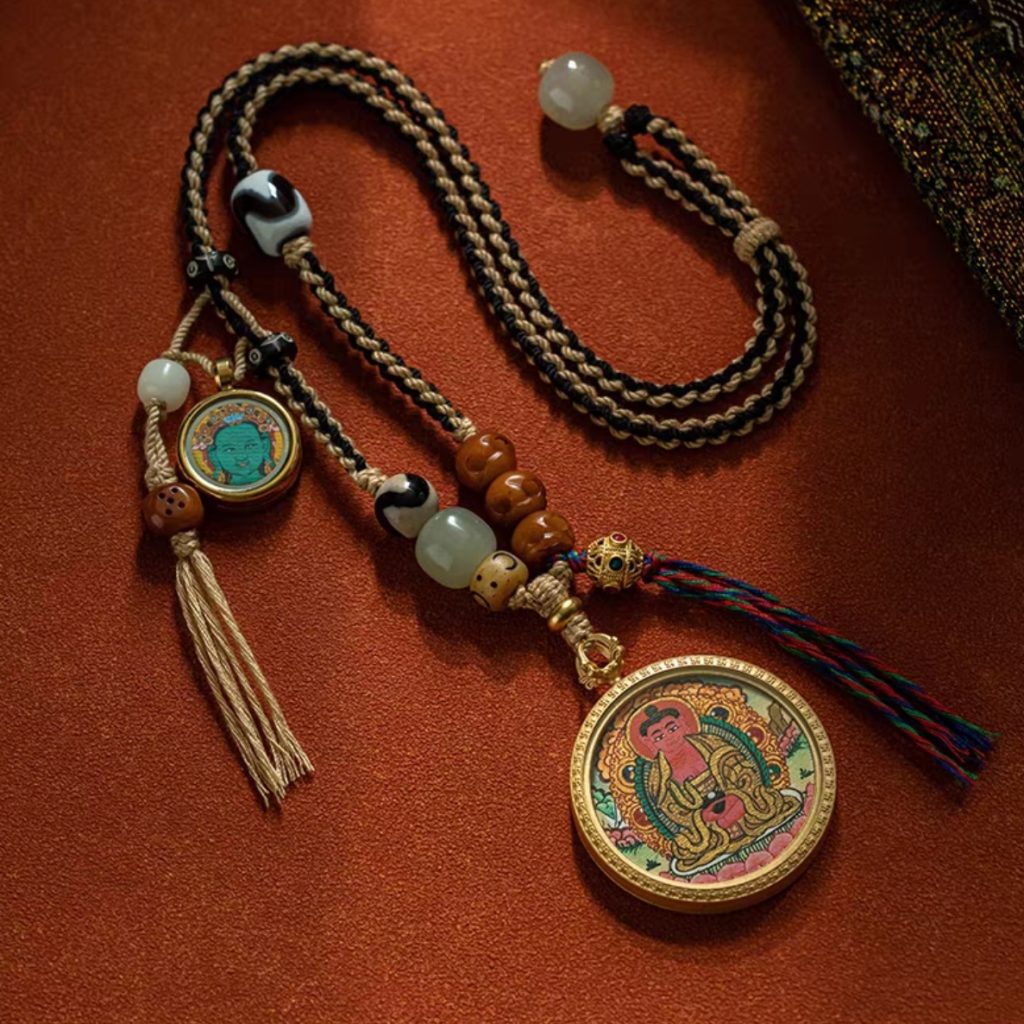
The making process step by step
Asian Art Museum thangka overview explains thangkas as portable Tibetan Buddhist paintings used for teaching, meditation, and ritual context. A traditional workshop may vary by lineage, teacher, region, and purpose, but the basic craft sequence is consistent enough for beginners to understand.
- Stretch cotton or silk on a frame.
- Apply and smooth the ground layer.
- Mark the composition with a grid.
- Draw the deity, mandala, or scene according to iconographic rules.
- Apply colors in layers.
- Shade, refine, and re-outline details.
- Add gold or mineral highlights where appropriate.
- Finish, mount, and sometimes consecrate the work depending on use.
Why the grid matters
The grid is not a casual sketching aid. It protects proportion and iconographic accuracy. In sacred images, posture, gesture, face, objects, and surrounding figures can all carry meaning. That is why thangka training often takes patience and teacher guidance.
Materials and details
Traditional thangkas may use mineral pigments, organic pigments, gold, cotton, or silk. Contemporary works may use modern materials. The material question matters because buyers and viewers often confuse “old-looking” with authentic. Craft quality is better judged through line control, proportion, color handling, and provenance.
| Feature | What to notice | Why it matters |
|---|---|---|
| Line work | Clean outlines and controlled details | Shows discipline and clarity |
| Proportion | Figure aligned with iconographic logic | Supports correct identification |
| Color | Layering, harmony, and symbolic consistency | Helps read the figure and mood |
| Mounting | Fabric, border, and preservation | Affects display and care |
How to look at thangka craft quality
A beginner can look at thangka craft without pretending to be an expert. Start with visible discipline: the outline, proportion, expression, color control, and detail work. Then ask about source, teacher, workshop, age, and whether the work is a painting or a print.
| Feature | What to notice | Why it matters |
|---|---|---|
| Line control | Clean outlines and steady small details | Shows training and patience |
| Proportion | Figure aligns with the intended iconography | Supports correct identification |
| Color layers | Colors feel deliberate rather than muddy | Helps the image remain readable |
| Provenance | Who made it, when, and for what purpose | Prevents vague authenticity claims |
Painting, print, or reproduction?
Not every thangka image is a hand-painted devotional object. Some are prints, museum reproductions, or decorative copies. That is not automatically bad, but the label should be honest. If the purpose is learning, a good reproduction can still teach visual structure.
FAQ
How long does it take to make a thangka?
It depends on size, detail, materials, and training. A simple work may take weeks, while complex pieces can take months or longer.
Are thangkas painted by hand?
Traditional thangkas are hand-painted, though prints and reproductions also exist.
What materials are used?
Cotton or silk, ground layers, pigments, brushes, and sometimes gold details are common.
Is a thangka religious art?
Many thangkas are Tibetan Buddhist sacred art, though modern viewers may also encounter them in museums and collections.
This article updates the older process page with clearer craft sequence, cultural context, and respectful boundaries around sacred art.
Leave a Reply