Quick answer
Hand types in palmistry group visible hand shapes into symbolic categories such as air, earth, fire, water, and five elements. These categories are reflection prompts, not personality proof.
- Compare hand shape, palm proportion, and finger length carefully.
- Use the category as language for reflection.
- Avoid health, identity, or destiny conclusions.
Palmistry hand types group visible hand features into symbolic categories. The common Western model uses earth, air, fire, and water hands. Some Chinese-influenced readings use five-element language. Both systems are best used as comparison tools, not as proof of personality, health, or destiny.
Last updated: July 7, 2026.
Quick answer
Start with palm shape and finger length. Earth hands are usually described as square palms with shorter fingers; air hands as square or rectangular palms with longer fingers; fire hands as longer palms with shorter fingers; water hands as longer palms with longer fingers. Mixed hands are common, so the best reading names the visible pattern and the uncertainty.
Key takeaways
- Hand type gives background context before line reading.
- Most hands are mixed; forcing one element usually weakens the reading.
- Four-element and five-element systems are related by theme but should not be blended too quickly.
- AI can classify obvious proportions only when the photo shows the full hand clearly.
How to identify hand type without forcing it
Allure’s palmistry guide describes four basic hand shapes connected with fire, earth, air, and water. For Feng Shui Karma, the important part is not the personality label. It is the visible observation: palm shape, finger proportion, texture, flexibility, and line density.
| Observation | What to compare | What not to assume |
|---|---|---|
| Palm length and width | Square, broad, narrow, rectangular, or long | A fixed identity type |
| Finger length | Shorter, longer, balanced, tapered, or strong | Intelligence, worth, or mental health |
| Texture and flexibility | Firm, soft, dry, smooth, rough, flexible | Medical condition or diagnosis |
| Line density | Few clear lines or many fine lines | Stress level or health proof |
| Left/right difference | Which hand shows the stronger pattern | A contradiction that must be “bad” |
The four common hand types
| Type | Visible pattern | Traditional theme | Responsible limit |
|---|---|---|---|
| Earth hand | Square palm, shorter fingers, firm or practical-looking hand | Grounding, steadiness, practical focus | Not proof that someone is rigid, limited, or destined for one career. |
| Air hand | Square or rectangular palm with longer fingers | Ideas, communication, analysis, movement of thought | Not an intelligence test or anxiety diagnosis. |
| Fire hand | Longer palm with shorter fingers and active-looking shape | Energy, action, directness, visibility | Not proof of anger, leadership, or impulsiveness. |
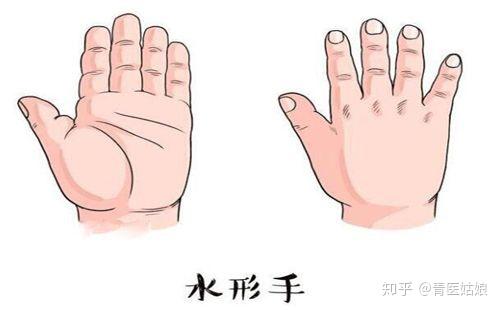
| Water hand | Longer palm, longer fingers, softer or more delicate look | Sensitivity, imagination, emotional response | Not a psychological assessment. |
Mixed hands are normal
A square palm with medium-long fingers may sit between earth and air. A longer palm with soft texture but shorter fingers may mix fire and water language. Instead of forcing one label, name the strongest clue and the secondary clue.
| Mixed result | Better wording | Why it helps |
|---|---|---|
| Earth + air | “The palm shape is grounded, while the fingers add analytical language.” | It explains the contrast instead of hiding it. |
| Fire + water | “The palm suggests action, while texture or finger length adds sensitivity.” | It avoids a cartoon personality label. |
| Air + water | “Both thought and feeling language may be present.” | It keeps the reading nuanced. |
| Unclear photo | “The image is not enough to classify hand type.” | It prevents confident guesses from bad evidence. |
How five-element hand readings differ
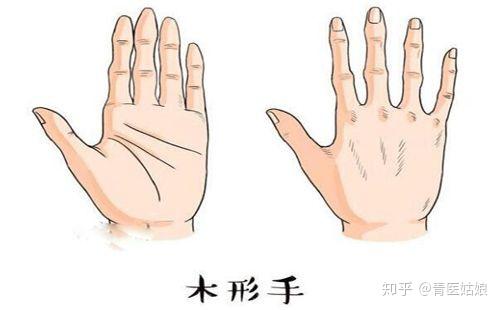
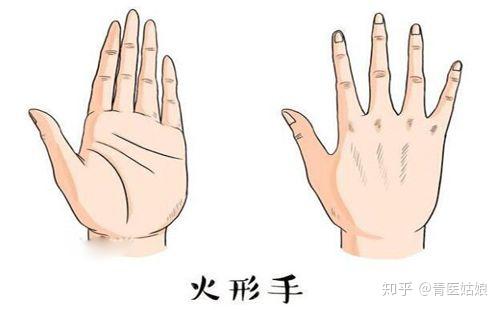
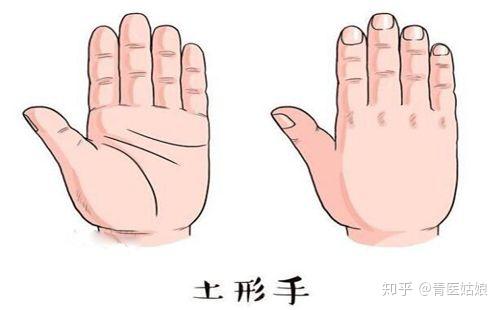
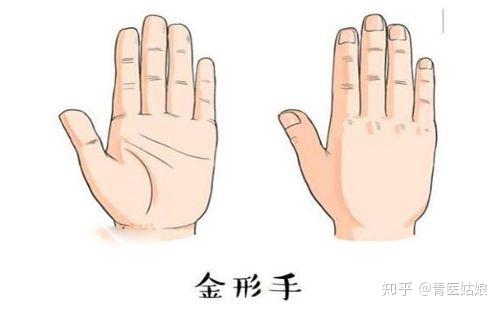
Five-element language usually works with Wood, Fire, Earth, Metal, and Water. Depending on the tradition, a reader may consider shape, finger structure, color, texture, body reading, or broader symbolic context. Do not assume a five-element hand reading means the same thing as the four Western hand shapes.
| Five-element word | Useful reflective theme | Caution |
|---|---|---|
| Wood | Growth, direction, flexibility, planning | Do not reduce the person to ambition. |
| Fire | Visibility, warmth, expression, movement | Do not turn it into impulsiveness proof. |
| Earth | Grounding, support, care, steadiness | Do not make it a fixed temperament claim. |
| Metal | Structure, clarity, refinement, boundaries | Do not use it as a value judgment. |
| Water | Flow, sensitivity, depth, adaptation | Do not read it as emotional weakness. |
Four-element and five-element systems should not be merged too fast
The most common mistake is to treat “water hand” in a four-element palmistry chart as identical to Water in a five-element reading. They may share themes such as flow or sensitivity, but they come from different interpretive systems. A good reader names the system first, then explains how the visible hand feature led to the label.
| Question to ask | Good answer | Weak answer |
|---|---|---|
| Which system are you using? | “This is the Western four-element hand-shape model.” | “All element systems mean the same thing.” |
| What feature led to that label? | “The palm is long and the fingers are also long.” | “It just feels like water.” |
| How certain is the type? | “Mostly air, with a secondary earth feature.” | “One type only, no uncertainty.” |
| How does it affect line reading? | “It gives background context for the head line.” | “It proves personality.” |
Photo quality can change the hand-type result
Hand-type classification depends on proportion. A wide-angle phone photo taken too close can stretch fingers. A curled hand can shorten the visible palm. A photo from above may hide texture and flexibility. If a tool or reader gives a confident hand type from a distorted image, ask for the observation behind the label.
- Use a straight-on photo with the wrist and fingertips visible.
- Keep fingers naturally open, not stretched or curled.
- Avoid camera angles that make the fingertips look closer than the palm.
- Use even light so texture and major lines are visible.
- Retake the photo if the result depends on finger length but fingertips are cropped.
How hand type changes the reading of a line
The same line can be framed differently depending on the hand background. A long head line on an air-leaning hand may be discussed through analysis and communication. A long head line on an earth-leaning hand may be discussed through practical focus. The line remains the visible evidence; the hand type changes the interpretive vocabulary.
| Line feature | Earth-leaning background | Air-leaning background | Water-leaning background | Fire-leaning background |
|---|---|---|---|---|
| Clear head line | Practical concentration | Analytical thought | Imaginative processing | Fast decision energy |
| Curved heart line | Steady affection | Verbal emotional processing | Emotional sensitivity | Warm expressive response |
| Strong life line | Grounded rhythm | Structured routines | Need for recovery space | High activity and recharge cycles |
Why hand type comes before line reading
Line meaning becomes clearer when hand type is treated as background. A sloping head line on a water-leaning hand may be framed differently from a sloping head line on a square earth-leaning hand. After this page, continue with major palm reading lines to connect hand shape with line vocabulary.
AI photo limits for hand type
An AI tool can compare shape only if the photo is useful. The full hand should be visible from wrist to fingertips, fingers should be naturally open, and the camera should not distort the palm. A cropped selfie angle can make fingers look longer or shorter than they are.
Hand type self-audit
- Trace the palm outline: square, rectangular, narrow, or long.
- Compare finger length against palm length.
- Write down texture and flexibility without medical language.
- Name the strongest element and one possible secondary element.
- Use “mixed” if two clues are equally strong.
FAQ
Which palmistry hand type is best?
None. The categories are symbolic lenses, not rankings.
Can my hand type change?
Basic structure changes slowly, but texture, flexibility, and line visibility can change with age, work, climate, and photo conditions.
Should I use four elements or five elements?
Use one system at a time. Mixing them too early creates confusing readings.
Can AI identify my hand type?
It can estimate visible proportions from a clear image, but it should mark uncertainty and avoid fixed personality claims.
This article explains traditional and symbolic reading language for cultural learning and self-reflection. It is not medical, legal, financial, psychological, or relationship advice.
Leave a Reply