Tag: symbol meanings

  • Hulu Gourd Meaning: Chinese Symbol of Blessing, Longevity, and Home Intention

    Hulu Gourd Meaning: Chinese Symbol of Blessing, Longevity, and Home Intention

    Intro direct answer

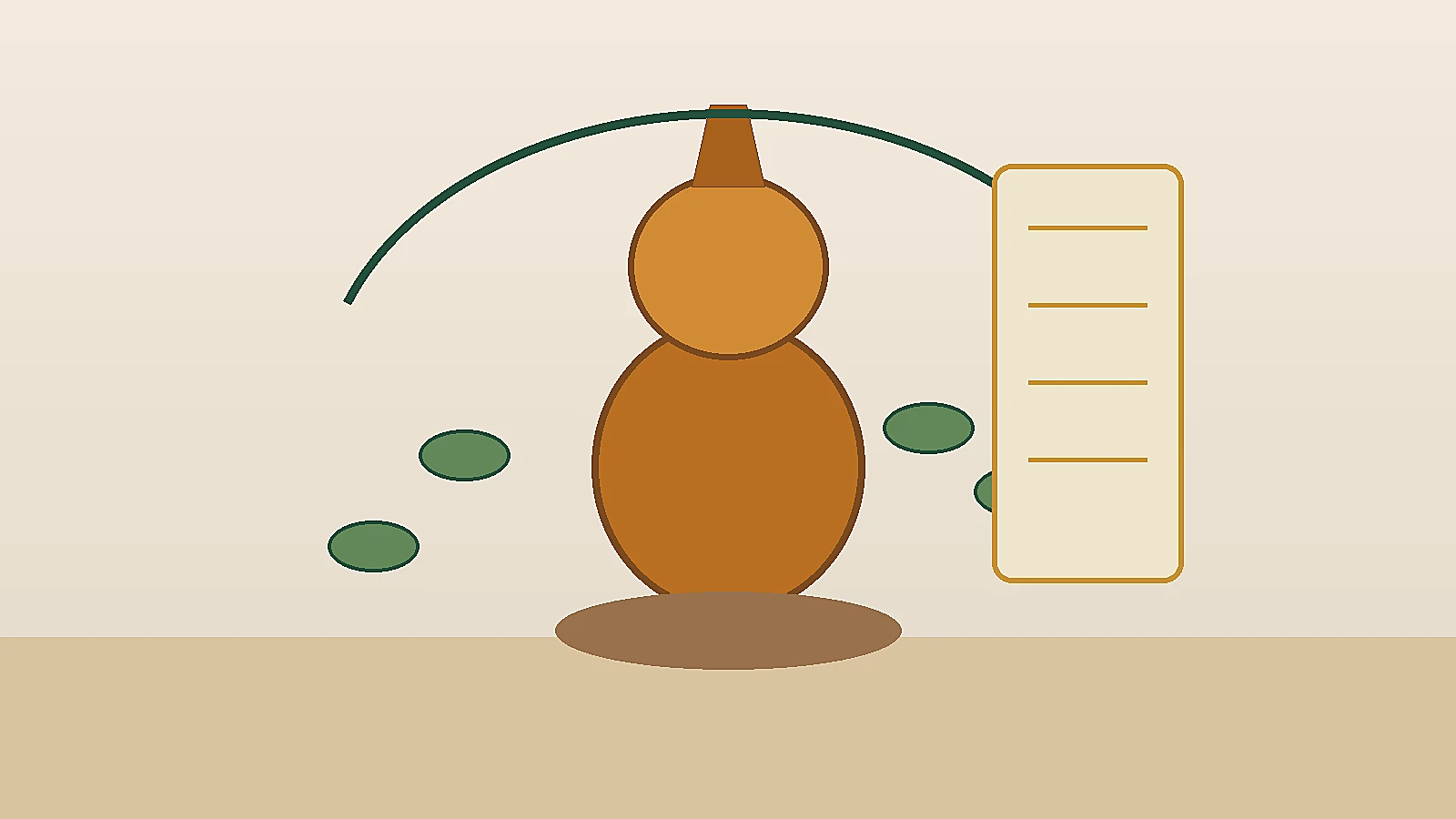
    Stylized hulu gourd on warm paper with vine patterns for a Chinese symbolism guide
    The hulu gourd is meaningful because of shape, sound, use, and long visual tradition, not because it guarantees a result.

    Direct answer: Hulu, the bottle gourd or calabash, is a Chinese symbol of blessing, longevity, family continuity, and protective intention. Its meaning comes from several layers at once: the vessel shape, the many seeds and trailing vines, old uses for holding medicine or liquid, sound puns in Chinese, and its long life in decorative art. In feng shui, a hulu can mark a wish for a calmer, more protected home, but it should not be treated as a device that guarantees health, wealth, children, or luck.

    Today’s two hulu clues were useful because they showed how much meaning people attach to one simple object. This guide keeps the cultural meaning and removes miracle claims. For related objects, start with the Feng Shui Symbol Guides category.

    Key takeaways

    • Hulu means bottle gourd or calabash. In Chinese culture it often carries auspicious wishes.
    • The form matters: a narrow neck, round belly, many seeds, and trailing vine all invite symbolic reading.
    • In art, gourds can point to longevity, family continuity, blessing, and good wishes.
    • In feng shui, use a hulu as an intention object, not as a medical, financial, or fate-changing promise.
    • A simple, clean placement is better than turning the home into a collection of cures.

    Why the gourd became symbolic

    A hulu is useful before it is symbolic. A dried gourd can hold liquid, medicine, seeds, or small objects. That vessel quality matters. It makes the gourd feel like something that gathers, carries, and preserves. The shape also has a visual rhythm: narrow at the neck, round in the body, then full again at the base.

    Chinese art often turns natural forms into rebuses, or visual puns. The SFO Museum gallery on hidden meanings in Chinese art shows how objects in Chinese art often carry rebus-like wishes, including wealth, honor, and longevity. A gourd-shaped vessel works in that visual world because shape, sound, and motif can all carry meaning.

    That does not mean every hulu object says the same thing. A carved symbolic objects, dried household gourd, painted vase, textile motif, and altar object each has its own context. The shared thread is auspicious intention.

    The main layers of hulu meaning

    Meaning layer Why people read it that way Careful modern wording
    Blessing and good wishes Hulu sounds close to auspicious wordplay in Chinese popular culture "A symbol of blessing" is safer than "it brings luck"
    Longevity Gourds appear with other long-life motifs in Chinese art "A longevity motif" is not a health claim
    Family continuity Many seeds and vines suggest continuation Avoid turning this into a fertility promise
    Protection A vessel can symbolically contain or absorb what feels unsettled Say "protective intention," not presented protection
    Healing association Gourds are linked in stories with medicine containers and Daoist immortals Do not claim medical effects

    The safest phrase is "a symbol of." It respects the tradition without pretending that an object controls outcomes.

    Longevity, blessing, and family wishes

    Museum and university materials show how gourds worked in visual culture. The Cleveland Museum of Art record for Teacups with a Hundred Sages describes a Chinese ceramic scene with sages and one figure seated on a large gourd, a reminder that the motif also appears in Daoist and literati worlds. A USC Digital Folklore Archive note on hu lu records contemporary family-level meanings around luck, protection, fertility, and personal memory. I treat that folklore source as lived context, not proof that the object produces those outcomes.

    For a home reader, the lesson is not "buy a gourd and wait for luck." It is that a small object can hold a wish. The wish should be named honestly: long life, family care, protection, gratitude, or a reminder to keep the home calm.

    How to use a hulu at home

    Choose placement by purpose and by respect for the room. A hulu near an entry console can mark welcome and protection. In a study, it can read as a quiet natural form. In a bedroom, keep it simple and avoid turning the nightstand into a cluster of cures. If the object is dusty, cracked, or visually stressful, it is not helping the room.

    Avoid fear-based placement lists that say one wrong position will ruin your luck. A good symbolic object should make the room feel more intentional. It should not make you anxious. If you are unsure how to read objects in a room, use How to Interpret Feng Shui Symbols for Your Home before adding more pieces. For a broader qi background, read what feng shui means in a home.

    What not to claim

    Do not claim that a hulu cures illness, fixes a relationship, guarantees wealth, removes all bad energy, or creates children. Those are high-risk claims and they disrespect the symbolic nature of the object.

    Better wording is plain: "In Chinese symbolism, the hulu often carries wishes for blessing, longevity, protection, and family continuity." That sentence leaves space for belief without selling certainty. It also makes the article usable for readers who are interested in culture but do not practice feng shui.

    FAQ

    Is hulu the same as wu lou?

    They are closely related terms in popular feng shui English. Hulu is the Mandarin word for bottle gourd or calabash. Wu lou is another romanized form often used in older English-language feng shui writing and Cantonese-influenced contexts.

    Where should I place a hulu?

    Place it where it supports the room: a clean entry console, shelf, study corner, or quiet display area. Do not block doors, crowd the bedside, or use it to hide ordinary maintenance problems.

    Does a hulu bring health or wealth?

    No object can presented health or wealth. It is safer to say the hulu symbolizes blessing, longevity, protection, and family wishes in Chinese culture.

    Can a hulu be used for energy cleansing?

    Some people use it as a protective symbol during a home reset, but cleaning, airflow, and safety matter first. For grounded reset advice, use the Energy Cleansing at Home guide.

    Content statement

    Content statement: This article explains hulu symbolism as cultural interpretation and home-reflection practice. It does not provide medical advice, fertility advice, financial promises, spiritual guarantees, or fate predictions.

  • Thangka Symbols Guide: Colors, Mudras, Deities, and Respectful Display

    Intro direct answer

    Abstract thangka-inspired scroll with color fields, lotus shapes, and mandala geometry for a symbolism guide
    Thangka details are best read slowly, with attention to Buddhist context rather than quick decoration.

    Direct answer: A thangka is a Tibetan Buddhist sacred image, usually made as a portable painting, textile, or appliqued work. Its symbols are not random decoration. Colors, hand gestures, seated postures, halos, lotus seats, mandala layouts, and surrounding figures all help identify the subject and the teaching context. For a home reader, the safest way to approach a thangka is as religious art and visual teaching, not as a quick charm for luck.

    The two social clues collected today focused on thangka origins and symbolic systems. I used them only as topic signals, then rebuilt the guide around museum and educational sources. If you want the site archive around Buddhist images, start with the Buddha and Thangka Symbols category.

    Key takeaways

    • A thangka is sacred Buddhist art, not ordinary wall decor. Context matters.
    • Color can suggest qualities such as purity, compassion, wisdom, protection, or activity, but meanings shift by figure and tradition.
    • Mudras, or hand gestures, help identify what a figure is doing in the image.
    • Mandala layouts are organized visual worlds, not simple patterns.
    • If you display a thangka at home, keep it clean, high, and respectful. Do not use it as a presented of wealth, health, or protection.

    What a thangka is

    A thangka is often described as a portable sacred image from Tibetan Buddhist culture. It may be painted on cloth, woven, embroidered, or made as applique. The Asian Art Museum thangka painting resource explains that thangkas were commissioned for meditation, thanksgiving, long-life requests, and merit-making. That range already shows why a thangka should not be reduced to decoration.

    Museum and education sources help ground the religious context before the symbol reading starts. The Asian Art Museum guide to Mahayana Buddhism explains why bodhisattvas matter in Mahayana traditions, which is useful when a thangka centers on figures such as Avalokiteshvara, Tara, or Manjushri.

    For the making process, read how thangka paintings are made. This article focuses on reading the visible symbols once you are looking at the image.

    A simple symbol map

    Use this table as a first pass, not as a final identification tool.

    Feature to notice What it may signal How to read it carefully
    Main figure Buddha, bodhisattva, teacher, protector, or deity Identify the figure before assigning meaning to details
    Body color A quality or activity linked with the figure Do not treat one color as universal across all images
    Hand gesture Teaching, protection, meditation, generosity, or earth witness Mudras work together with posture and object
    Held object Lotus, vajra, bell, bowl, sword, book, or jewel Objects often identify the figure or teaching theme
    Seat and base Lotus, throne, animal, or mandala platform The base shows status, purity, or symbolic setting
    Surrounding figures Lineage teachers, attendants, protectors, or offering figures Read them as part of a visual hierarchy

    A beginner mistake is to isolate one detail and declare the whole meaning. Thangka reading works better from large to small: subject, composition, gesture, objects, color, then smaller surrounding scenes.

    Colors and what they can mean

    Color is one of the easiest details to notice and one of the easiest to overstate. In popular summaries, white is often linked with purity or peaceful qualities, red with active energy or compassion, blue with depth or wisdom, green with activity, and gold with sacred radiance. Those are useful prompts, but they are not a dictionary.

    The figure matters first. A green Tara image does not mean the same thing as a green background in another painting. A wrathful protector may use dark or fiery colors without making the image "bad." In Buddhist art, fierce forms can represent protection, transformation, or the cutting through of obstacles. They are not horror images.

    For readers coming from feng shui or symbol guides, the discipline is restraint. Say "this color is often associated with…" rather than "this color always brings…." That keeps the article honest and respectful.

    Mudras, objects, and posture

    Mudras are hand gestures with religious meaning. A raised open palm may suggest reassurance or fearlessness. Hands resting in the lap may suggest meditation. A hand reaching toward the earth can refer to the Buddha calling the earth to witness. But the gesture alone is not enough.

    Objects add another layer. A lotus can point toward purity or awakened potential. A sword and book often appear in images of Manjushri, associated with wisdom. A vase, bowl, bell, vajra, jewel, or wheel may identify a figure or teaching. Posture also matters: seated, standing, dancing, peaceful, wrathful, solitary, or surrounded by attendants.

    If you want a comparison of common image types, use the Popular Buddha Thangka Types guide.

    Composition and mandalas

    Some thangkas are centered on a single figure. Others are dense maps of a sacred world. Mandalas are especially structured. They organize center, directions, gates, surrounding deities, colors, and protective borders into a visual plan. The Rubin Museum Himalayan art essay on a mandala is a useful starting point for seeing how Tibetan Buddhist art can map sacred space through a centered, ordered composition.

    For a beginner, the practical method is simple. Start at the center. Then move outward. Ask what receives the largest scale, what is repeated, what sits above, and what appears at the border. This keeps your reading tied to the image instead of to a list of detached meanings.

    Respectful home display

    If you display a thangka at home, treat it as sacred art. Keep it clean, avoid placing it low on the floor, and do not hang it where it will be splashed, smoked heavily, or used as a novelty background. If the image is connected to a living practice or teacher, follow that tradition's guidance.

    This matters for Feng Shui Karma because readers often arrive through symbol meanings. A thangka can be meaningful in a room, but it is not a machine for luck. It should not be sold to the reader as a cure for illness, a presented of money, or a tool for changing fate. If your interest comes through zodiac guardian lists, read the Chinese zodiac guardian Buddhas guide with the same caution.

    FAQ

    What is the main purpose of a thangka?

    A thangka can support meditation, teaching, devotion, thanksgiving, or merit-making in Tibetan Buddhist contexts. It should be read as sacred art before it is treated as room decor.

    Are thangka colors fixed in meaning?

    No. Colors have common associations, but the figure, school, text, and composition shape the meaning. Do not read a color as a universal promise.

    Can I hang a thangka in a living room?

    You can, but use respectful placement. Keep it clean, avoid low or careless display, and do not place it where food, smoke, or clutter will dominate the image.

    Is a printed thangka the same as a hand-painted thangka?

    No. A print may still show the iconography, but it does not have the same material process, patronage, or ritual context as a traditional hand-made work.

    Content statement

    Content statement: This article explains thangka symbolism as cultural and religious art context. It does not provide Buddhist initiation, ritual instructions, authentication, appraisal, or promises of protection, health, wealth, romance, or fate change.