Tag: Buddhist art

  • Thangka Symbols Guide: Colors, Mudras, Deities, and Respectful Display

    Intro direct answer

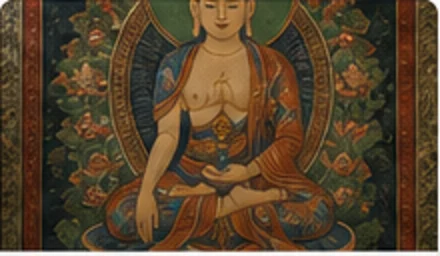
    Abstract thangka-inspired scroll with color fields, lotus shapes, and mandala geometry for a symbolism guide
    Thangka details are best read slowly, with attention to Buddhist context rather than quick decoration.

    Direct answer: A thangka is a Tibetan Buddhist sacred image, usually made as a portable painting, textile, or appliqued work. Its symbols are not random decoration. Colors, hand gestures, seated postures, halos, lotus seats, mandala layouts, and surrounding figures all help identify the subject and the teaching context. For a home reader, the safest way to approach a thangka is as religious art and visual teaching, not as a quick charm for luck.

    The two social clues collected today focused on thangka origins and symbolic systems. I used them only as topic signals, then rebuilt the guide around museum and educational sources. If you want the site archive around Buddhist images, start with the Buddha and Thangka Symbols category.

    Key takeaways

    • A thangka is sacred Buddhist art, not ordinary wall decor. Context matters.
    • Color can suggest qualities such as purity, compassion, wisdom, protection, or activity, but meanings shift by figure and tradition.
    • Mudras, or hand gestures, help identify what a figure is doing in the image.
    • Mandala layouts are organized visual worlds, not simple patterns.
    • If you display a thangka at home, keep it clean, high, and respectful. Do not use it as a presented of wealth, health, or protection.

    What a thangka is

    A thangka is often described as a portable sacred image from Tibetan Buddhist culture. It may be painted on cloth, woven, embroidered, or made as applique. The Asian Art Museum thangka painting resource explains that thangkas were commissioned for meditation, thanksgiving, long-life requests, and merit-making. That range already shows why a thangka should not be reduced to decoration.

    Museum and education sources help ground the religious context before the symbol reading starts. The Asian Art Museum guide to Mahayana Buddhism explains why bodhisattvas matter in Mahayana traditions, which is useful when a thangka centers on figures such as Avalokiteshvara, Tara, or Manjushri.

    For the making process, read how thangka paintings are made. This article focuses on reading the visible symbols once you are looking at the image.

    A simple symbol map

    Use this table as a first pass, not as a final identification tool.

    Feature to notice What it may signal How to read it carefully
    Main figure Buddha, bodhisattva, teacher, protector, or deity Identify the figure before assigning meaning to details
    Body color A quality or activity linked with the figure Do not treat one color as universal across all images
    Hand gesture Teaching, protection, meditation, generosity, or earth witness Mudras work together with posture and object
    Held object Lotus, vajra, bell, bowl, sword, book, or jewel Objects often identify the figure or teaching theme
    Seat and base Lotus, throne, animal, or mandala platform The base shows status, purity, or symbolic setting
    Surrounding figures Lineage teachers, attendants, protectors, or offering figures Read them as part of a visual hierarchy

    A beginner mistake is to isolate one detail and declare the whole meaning. Thangka reading works better from large to small: subject, composition, gesture, objects, color, then smaller surrounding scenes.

    Colors and what they can mean

    Color is one of the easiest details to notice and one of the easiest to overstate. In popular summaries, white is often linked with purity or peaceful qualities, red with active energy or compassion, blue with depth or wisdom, green with activity, and gold with sacred radiance. Those are useful prompts, but they are not a dictionary.

    The figure matters first. A green Tara image does not mean the same thing as a green background in another painting. A wrathful protector may use dark or fiery colors without making the image "bad." In Buddhist art, fierce forms can represent protection, transformation, or the cutting through of obstacles. They are not horror images.

    For readers coming from feng shui or symbol guides, the discipline is restraint. Say "this color is often associated with…" rather than "this color always brings…." That keeps the article honest and respectful.

    Mudras, objects, and posture

    Mudras are hand gestures with religious meaning. A raised open palm may suggest reassurance or fearlessness. Hands resting in the lap may suggest meditation. A hand reaching toward the earth can refer to the Buddha calling the earth to witness. But the gesture alone is not enough.

    Objects add another layer. A lotus can point toward purity or awakened potential. A sword and book often appear in images of Manjushri, associated with wisdom. A vase, bowl, bell, vajra, jewel, or wheel may identify a figure or teaching. Posture also matters: seated, standing, dancing, peaceful, wrathful, solitary, or surrounded by attendants.

    If you want a comparison of common image types, use the Popular Buddha Thangka Types guide.

    Composition and mandalas

    Some thangkas are centered on a single figure. Others are dense maps of a sacred world. Mandalas are especially structured. They organize center, directions, gates, surrounding deities, colors, and protective borders into a visual plan. The Rubin Museum Himalayan art essay on a mandala is a useful starting point for seeing how Tibetan Buddhist art can map sacred space through a centered, ordered composition.

    For a beginner, the practical method is simple. Start at the center. Then move outward. Ask what receives the largest scale, what is repeated, what sits above, and what appears at the border. This keeps your reading tied to the image instead of to a list of detached meanings.

    Respectful home display

    If you display a thangka at home, treat it as sacred art. Keep it clean, avoid placing it low on the floor, and do not hang it where it will be splashed, smoked heavily, or used as a novelty background. If the image is connected to a living practice or teacher, follow that tradition's guidance.

    This matters for Feng Shui Karma because readers often arrive through symbol meanings. A thangka can be meaningful in a room, but it is not a machine for luck. It should not be sold to the reader as a cure for illness, a presented of money, or a tool for changing fate. If your interest comes through zodiac guardian lists, read the Chinese zodiac guardian Buddhas guide with the same caution.

    FAQ

    What is the main purpose of a thangka?

    A thangka can support meditation, teaching, devotion, thanksgiving, or merit-making in Tibetan Buddhist contexts. It should be read as sacred art before it is treated as room decor.

    Are thangka colors fixed in meaning?

    No. Colors have common associations, but the figure, school, text, and composition shape the meaning. Do not read a color as a universal promise.

    Can I hang a thangka in a living room?

    You can, but use respectful placement. Keep it clean, avoid low or careless display, and do not place it where food, smoke, or clutter will dominate the image.

    Is a printed thangka the same as a hand-painted thangka?

    No. A print may still show the iconography, but it does not have the same material process, patronage, or ritual context as a traditional hand-made work.

    Content statement

    Content statement: This article explains thangka symbolism as cultural and religious art context. It does not provide Buddhist initiation, ritual instructions, authentication, appraisal, or promises of protection, health, wealth, romance, or fate change.

  • Chinese Zodiac Guardian Buddhas: A Cultural Meaning Guide

    Chinese Zodiac Guardian Buddhas: A Cultural Meaning Guide

    Direct answer: The Chinese zodiac guardian Buddha list links the twelve zodiac animals with eight Buddhas or bodhisattvas in modern popular Chinese practice. It is useful as a cultural meaning chart, but it should not be treated as a universal Buddhist rule or a promise of protection.

    Traditional Buddhist painting detail used for a zodiac guardian Buddha cultural guide
    Guardian Buddha lists are best read as cultural symbolism, not as a fixed prediction system.

    The list is often called Ben Ming Fo in Chinese-language content. English readers usually meet it through symbolic objects, amulets, thangka captions, or zodiac guides. The problem is that many short posts turn the chart into a presented: wear this figure and your luck changes. This article takes the safer route. It explains the associations, the symbolic meanings, and the limits.

    If you do not know your animal yet, use the Chinese Zodiac Calculator first, then come back to the table.

    Key takeaways

    • The guardian Buddha chart is a popular zodiac-symbol system, not a single rule followed by all Buddhists.
    • Two zodiac animals sometimes share one guardian figure, so the table has eight guardian names for twelve animals.
    • The meaning should be read as reflection: compassion, wisdom, steadiness, clarity, or patience.
    • Do not use deity images as fear cures or wealth promises.
    • If you display or wear one, treat it with basic respect and learn the name before using it as decoration.

    What this list is and is not

    The list is a cultural bridge between zodiac identity and Buddhist imagery. It is not a horoscope, a medical claim, or proof that one deity belongs only to one animal.

    Museum education sources describe the Chinese calendar animals as a cycle used in festivals, stories, and visual culture. The National Museums Liverpool explanation of Chinese calendar animals is a useful starting point, and the Asian Art Museum zodiac animals resource treats zodiac animals as a teaching and art motif. The guardian Buddha chart adds another layer by pairing those animals with Buddhist figures.

    That pairing is strongest in popular practice and commercial symbolism. A Buddhist practitioner, an art historian, and a symbolic objects seller may all explain the chart differently. The honest way to use it is to say, “In this popular Chinese zodiac system, this animal is often associated with this figure.” Anything stronger needs better evidence.

    Reading the names with respect

    The names in the table are religious and artistic figures, so the tone should stay respectful.

    For example, the Asian Art Museum Avalokiteshvara resource explains Avalokiteshvara as a compassionate bodhisattva, known in Chinese culture as Guanyin. The museum also explains in its guide to Mahayana Buddhism that bodhisattvas are compassionate beings central to many Mahayana traditions. That context matters because a guardian chart can flatten complex religious art into a quick consumer label.

    A good reading asks what quality the figure suggests. Compassion, wisdom, light, vow, steadiness, or fierce protection can become reflection prompts. They should not become claims that the image will fix money, illness, relationships, or fate.

    The common zodiac guardian Buddha table

    This is the common eight-guardian version seen in many Chinese-language zodiac guides.

    Zodiac animal Common guardian figure Meaning to reflect on Careful wording
    Rat Thousand-Armed Avalokiteshvara / Guanyin Compassion, attentive care, many ways to help Associated with compassion in this chart
    Ox, Tiger Akasagarbha Vastness, patience, stored wisdom A reminder to act with steadiness
    Rabbit Manjushri Wisdom, learning, clear speech Useful as a study and discernment symbol
    Dragon, Snake Samantabhadra Practice, vow, disciplined action A symbol of following through
    Horse Mahasthamaprapta Focused strength, resolve, spiritual momentum A reflection on disciplined energy
    Goat, Monkey Vairocana Illumination, central clarity, universal Buddha imagery A symbol of seeing the bigger pattern
    Rooster Acala / Fudo Myoo Fierce clarity, cutting through confusion A protective image, not an excuse for fear
    Dog, Pig Amitabha Light, devotion, Pure Land associations A devotional symbol in many East Asian contexts

    How to use the table without turning it into superstition

    Use the table as a meaning guide, then stop before it becomes a promise.

    If your animal points to Manjushri, the helpful question is not “Will this make me smarter?” It is “Where do I need clearer judgment?” If your animal points to Guanyin, ask where compassion or patience would change your behavior. This turns the chart into reflection instead of dependency.

    For Buddhist art context beyond zodiac lists, read the site guide to Buddha and Thangka meanings. For more zodiac articles, continue through the Chinese Zodiac Guide category.

    FAQ

    Is Ben Ming Fo official Buddhist doctrine?

    No single wording should be presented that way. It is better described as a popular Chinese zodiac-symbol association that uses Buddhist figures.

    Can two zodiac animals share one guardian?

    Yes. In the common eight-guardian list, Ox and Tiger share Akasagarbha, Dragon and Snake share Samantabhadra, Goat and Monkey share Vairocana, and Dog and Pig share Amitabha.

    Can I wear a guardian Buddha symbolic objects?

    You can, but treat it as a meaningful religious or cultural image, not a charm that guarantees outcomes. Avoid wearing sacred imagery in a way that feels careless to you or your community.

    What if my source gives a different name?

    Record the source and tradition. Some lists vary by region, school, translation, and commercial habit. Do not force a single list to cover every Buddhist or Chinese community.

    Content statement: This article explains zodiac guardian Buddha associations as cultural symbolism and religious-art context. It does not promise protection, wealth, health, romance, or a change in destiny.